
Meal Planning Without the Sunday-Night Stress
A flexible, realistic approach to planning meals, using what you have, and making grocery shopping easier—without giving up your whole weekend.
Meal planning can sound like a whole second job. You search for recipes, try to please everyone, check the fridge, build a grocery list, and attempt to predict exactly what you’ll feel like eating five days from now. Suddenly, a plan that was supposed to make life easier has taken over your Sunday night.
It doesn’t have to work that way.
A useful meal plan isn’t a perfect menu that never changes. It’s a simple framework that helps you answer three everyday questions: What can we eat? What do we already have? And what do we need to pick up?
With a little planning and plenty of flexibility, you can make meals feel more manageable without spending hours batch-cooking or preparing a different recipe for every night of the week.
1. Start with the week you actually have
Before choosing recipes, take a quick look at your calendar. Which evenings are busy? Do you have late work shifts, school activities, appointments, or family commitments? When will you have time to cook, and when will you need dinner on the table quickly?
Build your meal plan around those realities.
Choose quicker meals for busy evenings and save recipes that need more preparation for days when you have more time. If you know Tuesday is packed, don’t schedule a complicated meal that requires an hour of chopping and three pans.
Try this: Label each evening as quick, flexible, or more time available. You don’t need to assign every meal immediately. This simple overview gives you a realistic starting point.
2. Plan a few meals—not every bite of the week
You don’t need seven brand-new dinners, a colour-coded spreadsheet, and a meal-prep marathon to be organized.
Start by planning the meals that usually cause the most stress. For many households, that’s dinner. Add breakfasts, lunches, or snacks if planning those would genuinely help.
Build your week around a few repeatable categories:
- Quick meals: Options you can put together with minimal preparation.
- Leftover-friendly meals: Dishes that can cover another lunch or dinner.
- Family favourites: Reliable meals people already enjoy.
- Flexible meals: Recipes that can use different vegetables, proteins, or pantry ingredients.
- Slower meals: Something you enjoy making when you have the time.
3. Check your kitchen before writing the grocery list
Before shopping, take a quick inventory of your fridge, freezer, and pantry. Look for ingredients that need to be used soon, leftovers that can become another meal, and staples you’re running low on.
Then build a few meals around what you already have.
For example, vegetables that need using might work in a pasta dish, soup, stir-fry, or omelette. Cooked chicken could become wraps one day and a salad or grain bowl another day. The best option depends on what you have and what your household enjoys.
This approach can help reduce food waste and prevent you from buying duplicate ingredients.
A helpful habit: Check your kitchen first and shop second. Your meal plan should work with your food—not automatically send you to the store for an entirely new set of ingredients.
4. Turn the meal plan into a practical grocery list
Once you’ve chosen your meals, list the ingredients you need. Check each recipe against your kitchen inventory and note only what is missing.
Group items by category—such as produce, dairy, pantry goods, and proteins—so it’s easier to work through the store. If several meals use the same ingredient, add up the amount you’ll need rather than buying it separately for every recipe.
Try to keep your list connected to your actual plan. It’s easy to buy ingredients for exciting recipes and then discover you don’t have the time or energy to make them.
You can also keep a running list during the week. When you use the last of a staple, add it immediately instead of relying on your memory when shopping day arrives.
5. Make preparation easier, not bigger
Meal prep doesn’t have to mean cooking every meal on Sunday and filling the fridge with identical containers.
A small amount of preparation can make a noticeable difference. Depending on your week, you might wash produce, chop a few vegetables, cook a batch of rice, portion snacks, prepare a sauce, or move something from the freezer to the fridge when appropriate.
Choose tasks that save time later. If preparing five recipes at once makes you dread your weekend, do less.
You can also use a short midweek check-in to see what needs replenishing or preparing. The best routine is the one you can repeat without feeling overwhelmed.
Remember to store and handle food safely, and refrigerate perishable items promptly. For specific storage times and temperatures, follow reliable food-safety guidance.
6. Create a backup plan for busy nights
Even a well-organized week can go sideways. Meetings run late, plans change, someone gets tired, or the meal you expected to make suddenly sounds unappealing.
That’s why it helps to keep a few easy backup options available. These might be freezer meals, eggs and toast, a simple pasta dish, soup, sandwiches, or another quick option that suits your household.
Choose backups you can make with ingredients you normally keep on hand. They don’t need to be fancy or perfectly balanced culinary masterpieces; they just need to help you get a meal on the table when the original plan no longer fits.
When plans change, swap meals between days, use leftovers, or choose the easiest reasonable option. A meal plan is a guide, not a contract.
7. Make room for different tastes, budgets, and appetites
Meal planning should support your household, not create a new source of arguments or pressure.
If people have different preferences, include familiar meals and offer flexible components where practical. For example, a meal with a shared base and optional toppings can make it easier for everyone to customize their plate.
Budget matters, too. Consider what is on sale, which ingredients can be used in more than one meal, and whether lower-cost pantry staples can help stretch the week. You don’t need to buy specialty ingredients for every recipe.
And be realistic about portions. Planning for leftovers can be useful when you know they’ll be eaten, but cooking far more food than your household can use may lead to waste.
The goal is to create a plan that fits your people, budget, schedule, and preferences—not someone else’s picture-perfect meal-prep routine.
8. Keep your system simple enough to use
Your plan only helps if you can find it when you need it. Choose a place to organize meals, recipes, grocery items, and the tasks connected to them. That might be a paper planner, a digital calendar, an app, or a combination that works for your household.
Try to avoid maintaining several disconnected lists that all need updating. A central overview can make it easier to see what you’re planning, what you need to buy, and what still needs attention.
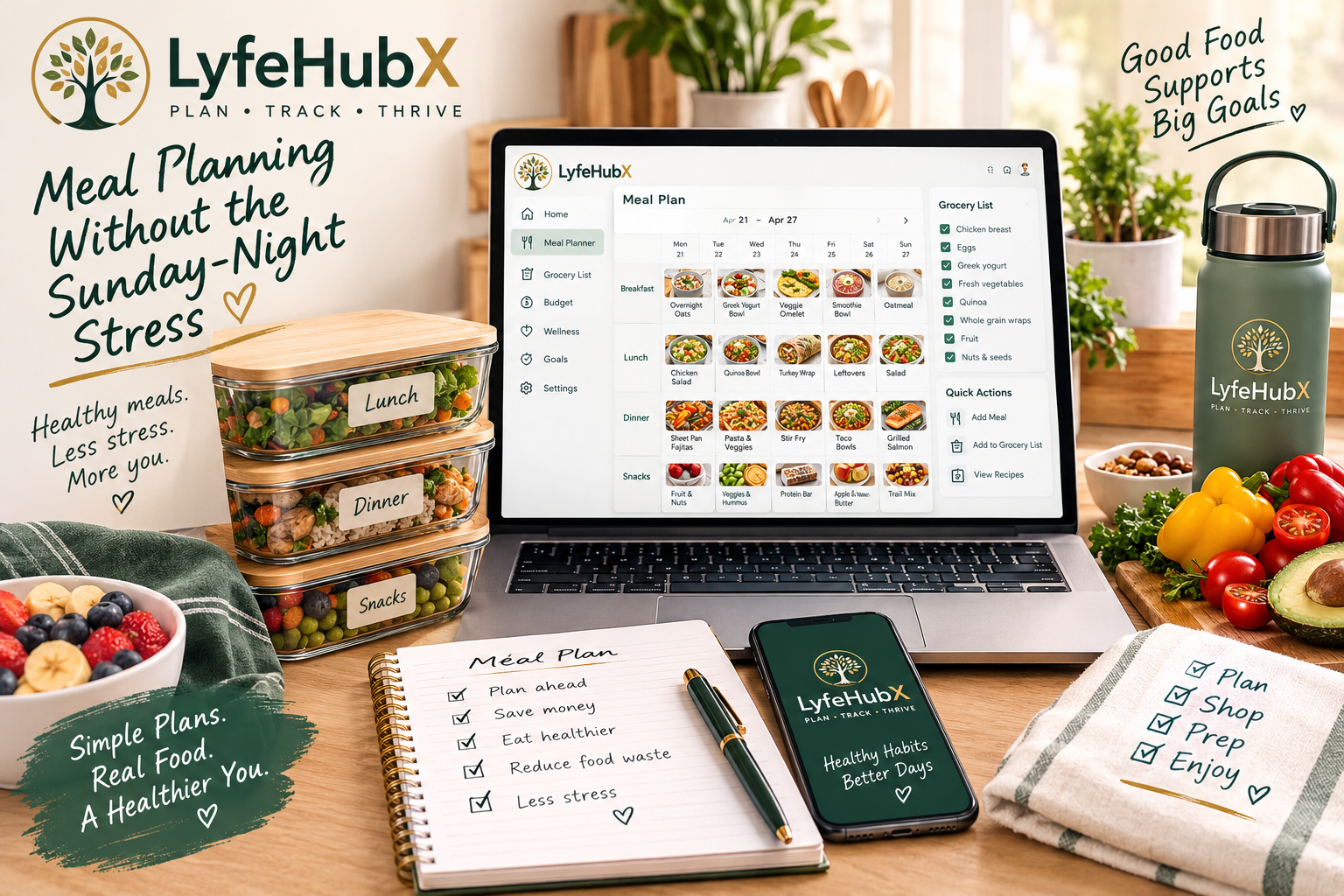
LyfeHubX brings meal planning, recipes, and grocery organization into your broader household routine, helping you keep food-related planning alongside the other responsibilities of the week.
Start with the features and habits that are useful to you. You can add more structure later if you need it; you don’t have to build an elaborate system on day one.
A calmer week starts with a flexible plan
You don’t need to spend your entire Sunday preparing food to feel more organized. Start by checking your calendar, choosing a handful of realistic meals, using ingredients you already own, and writing a grocery list based on what’s actually missing.
Leave space for leftovers and last-minute changes. Keep a few backup meals available. Review what worked at the end of the week, then make one small adjustment for the next one.
Most importantly, let the system serve you. Some weeks will be organized; others will be busy and unpredictable. A good meal plan can adapt to both.
The goal isn’t a perfect Sunday-night routine. It’s making everyday meals easier, reducing last-minute decisions, and giving yourself a little more breathing room throughout the week.
Get more tips like this ✨
Subscribe to our newsletter for weekly productivity tips, family organization hacks, and life-simplifying insights.
Comments
No comments yet. Be the first to share your thoughts!